A double coat built for work
The Golden Retriever was bred to retrieve birds from cold water, and its coat is a two-layer system. Underneath is a soft, dense undercoat that traps air and insulates. On top is a longer, water-resistant outer coat that sheds rain and protects the skin. Long feathering grows on the backs of the legs, the chest, the belly, the tail and the “britches” on the back of the thighs.
This coat does not need haircuts the way a Poodle or doodle coat does. What it needs is regular removal of the dead undercoat, which otherwise packs down, holds moisture and leaves tumbleweeds of fur all over your house.
Why we do not shave Goldens
Shaving a Golden Retriever is a common summer request, and a common regret. The undercoat and outer coat work together to regulate temperature, and the outer coat shields the skin from sun. Once shaved, the two layers can grow back at different rates. The soft undercoat often comes in first, giving the coat a fuzzy, cottony texture, and in some dogs the guard hairs take a long time to return.
The better way to keep a Golden comfortable in July is to remove the loose undercoat so air can move through the coat. A good bath and blow-out takes out an amazing amount of hair. Our deshedding guide for double-coated dogs explains the difference in more detail.
Shedding seasons
Goldens shed steadily all year and then “blow coat” heavily, usually in spring and again in fall. During those weeks, the undercoat comes out in clumps. Booking a groom at the start of a blowout saves you weeks of vacuuming. Between visits, an undercoat rake followed by a slicker brush, and a final pass with a metal comb through the feathering, keeps things under control.
The Golden Retriever tidy
A classic Golden trim keeps the natural look and makes the dog look clean and finished:
- Feet. Hair between the pads is trimmed short and the foot is shaped round, like a cat’s paw. This also helps traction on wood floors.
- Ears. Fluffy hair on and behind the ears is thinned and neatened. The area behind the ears is the most common mat spot on a Golden.
- Feathering. The legs, chest and tail feathering are shaped and evened out, not removed.
- Britches and sanitary area. Tidied so they stay cleaner.
- Neck and chest. Lightly blended so the ruff looks smooth rather than bulky.
Ticks, ponds and Golden ears
Goldens are outdoor dogs, and in central Massachusetts that means ticks in the warm months and swimming in ponds and lakes. A thick coat can hide a tick for days, so a groom is a good time for a careful check. Floppy ears that get wet often stay damp, which is why ear cleaning is part of every groom here. Our tick season guide covers what to look for at home.
What Star Dog includes and what it costs
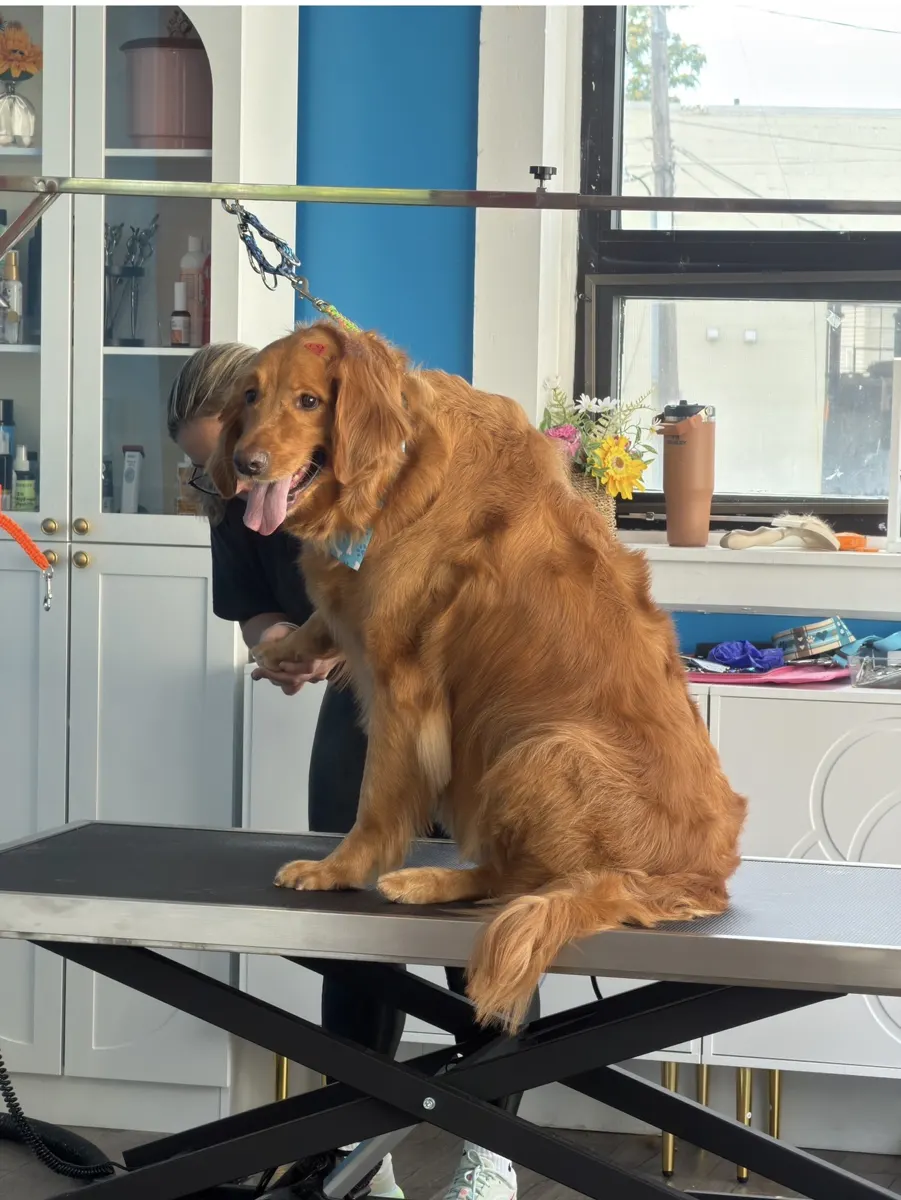
Every full groom at Stardog Grooming includes a bath, a full dry, brushing out, a nail trim, ear cleaning, and a trim to the breed standard or to your own preference. For a Golden, the drying and brush-out are where much of the shedding is removed, and you can see a Golden on our table in the photo above.
Most Golden Retrievers weigh between 55 and 75 lb, so they are usually a large dog groom at $140 (about three and a half hours). Larger males over 70 lb are priced as extra large at $160. If your Golden is mainly shedding, ask about adding our de-shedding treatment to the groom ($45 for large and extra large dogs). Large and extra large grooms are booked as a request so the team can set aside enough table time.
Frequently asked questions
Can I shave my Golden Retriever for summer?
It is not recommended. The double coat insulates against heat as well as cold and protects the skin from sun, and shaved Golden coats can grow back uneven or fuzzy.
When do Golden Retrievers shed the most?
They shed all year, with heavy blowouts usually in spring and fall as the undercoat changes for the season. A groom during those weeks removes a lot of hair at once.
What is a Golden Retriever tidy trim?
It shapes the feathering on the legs, chest, tail and britches, rounds the feet, trims the hair under the paws and neatens the ears, while leaving the coat's natural length.
How often should I brush my Golden at home?
Two or three times a week works for most Goldens, and daily during heavy shedding season.