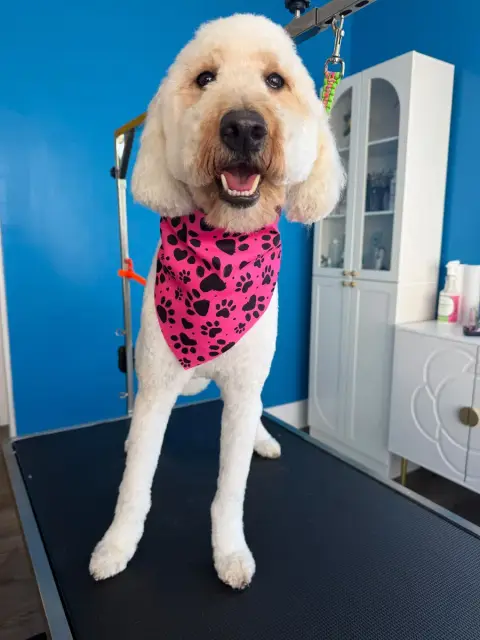
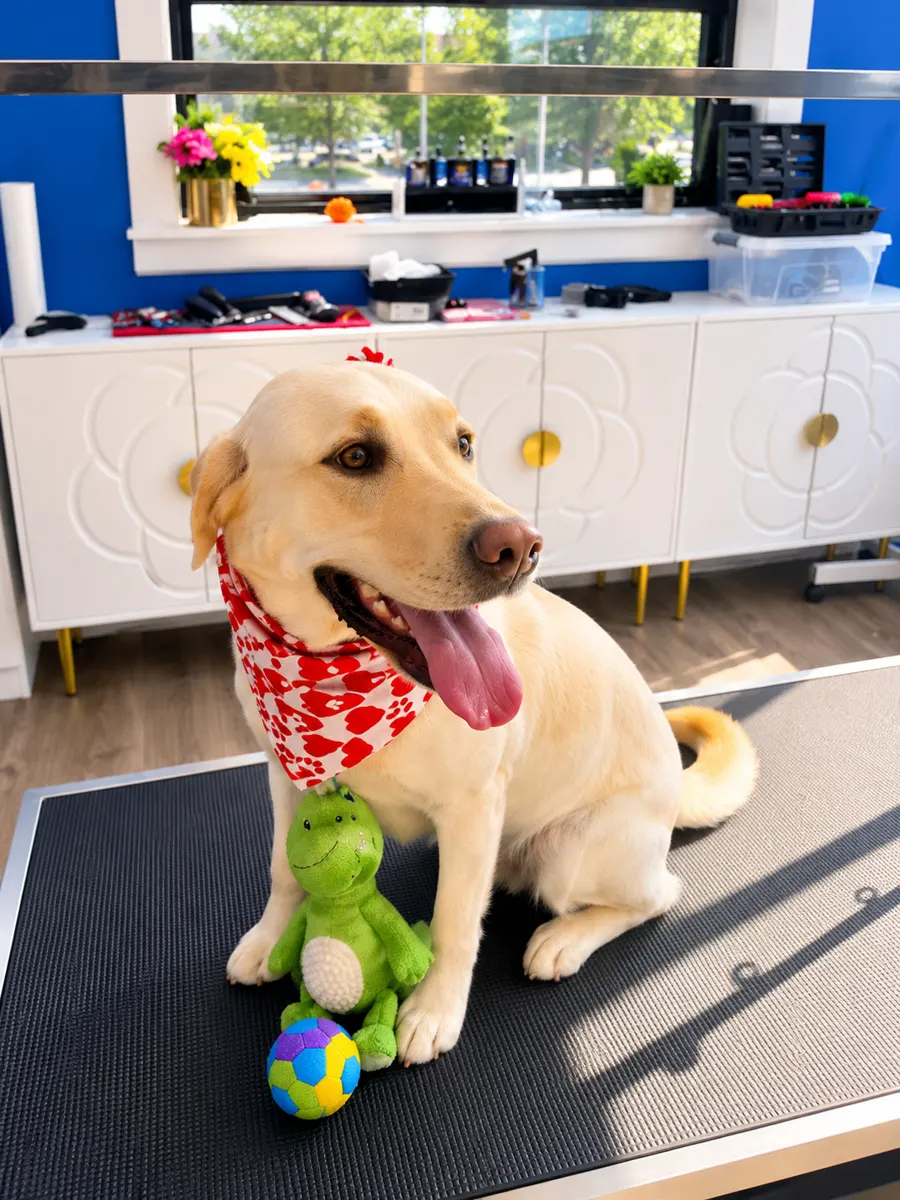
Brushing at home is the single best thing you can do for your dog’s coat between grooms. It prevents mats, controls shedding, keeps skin healthy, and gives you a chance to notice lumps, ticks, scratches or sore spots early. It also helps your dog get comfortable being handled, which makes every grooming appointment easier.
Choose the right tools for your dog’s coat
| Coat type | Example breeds | Main tools | How often |
|---|---|---|---|
| Curly or wavy | Goldendoodle, Labradoodle, Bernedoodle, Poodle | Slicker brush, metal comb, detangling spray | 3 to 4 times a week, daily for long styles |
| Long and silky | Shih Tzu, Yorkie, Maltese | Pin brush or soft slicker, fine metal comb | Daily or every other day |
| Double coat | Golden Retriever, Husky, German Shepherd, Bernese, Pomeranian | Undercoat rake, slicker, metal comb | 2 to 3 times a week, daily in shedding season |
| Wiry | Schnauzer | Slicker, metal comb | 1 to 2 times a week |
| Feathered | Cavalier, Cocker Spaniel | Slicker, metal comb (focus on ears, legs, belly) | 2 to 3 times a week |
| Short and dense | Labrador | Rubber curry brush, bristle brush | Weekly, more when shedding |
What each tool does
- Slicker brush: fine bent wires that separate the coat and remove loose hair. The most useful brush for most dogs. Use a light touch.
- Metal comb: the test. If it slides from skin to tip, that section is done. If it catches, keep working.
- Undercoat rake: long teeth that pull loose undercoat from double coats.
- Pin brush: good for finishing long, silky coats; does not reach deep tangles.
- Rubber curry brush: loosens dead hair and massages short coats.
- Bristle brush: smooths and adds shine to short coats.
- Detangling spray: reduces friction and static so brushing is more comfortable.
Line brushing: the groomer’s technique
For curly, long and double coats, brushing only the surface leaves tangles underneath. Line brushing reaches the skin:
- Lightly mist the coat with detangling spray.
- Start at the bottom of a back leg.
- With one hand, hold the hair up so you can see a line of skin.
- Brush the hair below that line down and away from the skin, in short strokes.
- Move the line up a little and repeat.
- Comb each section when you finish it.
- Work around the body in a steady order: legs, rear, sides, chest, neck, ears, head, tail.
It takes longer at first, but it is the only way to be sure the coat is clear all the way down.
Areas that need extra attention
- Behind and under the ears
- Under the collar and harness
- Armpits and inner legs
- Belly
- The “pants” (back of the thighs) on double-coated breeds
- Tail and rear
- Feet
Brushing short-coated dogs
Short coats are simpler. Use a rubber curry brush in circular motions to loosen dead hair, then a bristle brush in the direction of hair growth to sweep it away. Doing this outside during shedding season saves a lot of vacuuming. See Labrador grooming for more.
Brushing double-coated dogs
The undercoat is what sheds and packs down. Start with an undercoat rake in the direction of growth, then use a slicker on feathering and a comb behind the ears. Do not try to remove all the undercoat in one session. Our guide to de-shedding double-coated dogs covers coat blow season.
Making brushing a good experience
- Start short. Two or three minutes of calm brushing beats twenty minutes of struggle.
- Use treats. Reward calm behavior. A lick mat with a spread of dog-safe food can keep some dogs busy.
- Pick a calm time, like after a walk.
- Hold the hair at the base when you meet a tangle, so you do not pull the skin.
- Watch body language. Lip licking, turning away and stiffening mean slow down or stop.
- Never force through mats. If the comb cannot get through, see our guide on dog matting.
If your dog is very anxious about being handled, our guide to grooming anxious dogs has a step-by-step approach.
What to look for while you brush
Brushing is also a weekly health check. Look and feel for:
- Lumps or bumps
- Ticks or fleas (tiny dark specks of flea dirt near the tail are a common sign)
- Redness, scabs, flaky skin or hot spots
- Areas your dog does not want touched
- Hair loss or thinning patches
Let your veterinarian know about anything new, especially lumps that grow, skin that looks infected, or a spot that seems painful.
Brushing and bathing
Always brush before a bath, not just after. Water tightens tangles into mats. After a bath, dry the coat fully while brushing, especially for doodles and long coats. Letting them air dry is a common cause of matting. Our doodle coat care guide covers this in detail.
When to book a groomer
Home brushing keeps the coat in shape between visits, but it does not replace a full bath, blow-out and haircut. Book a full groom on your dog’s usual schedule; small dogs up to 20 lb use the small dog full groom. If you find mats your comb cannot get through, book dematting ($65 per hour). For heavy shedders in spring and fall, ask about adding a de-shedding treatment to the groom.
Frequently asked questions
Does brushing really reduce shedding?
Yes. Brushing removes loose hair before it falls on your floors and furniture, and it spreads the coat's natural oils so the coat stays healthier.
My dog bites the brush. What should I do?
Keep sessions very short, use treats or a lick mat as a distraction, and check that you are not pulling on tangles. If your dog growls or snaps, stop and talk to your veterinarian or a trainer.
Should I brush my dog wet or dry?
Mostly dry, with a light mist of detangling spray. Brushing a soaking wet coat can stretch and break hair, and mats tighten when wet.
Can I brush too hard?
Yes. Pressing hard with a slicker or rake can scratch the skin, a problem sometimes called brush burn. Use light pressure and let the tool do the work.