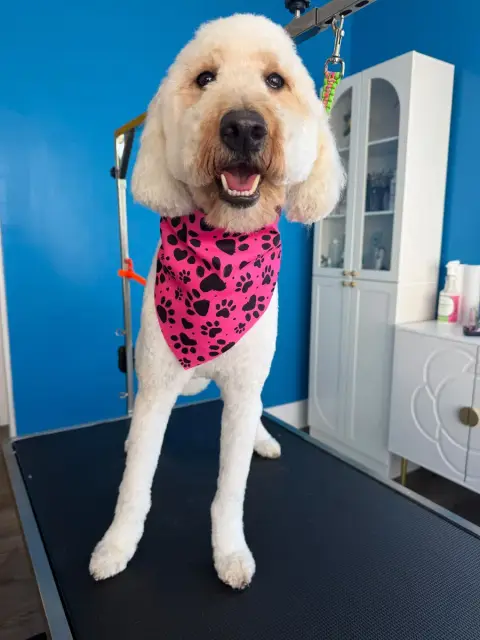
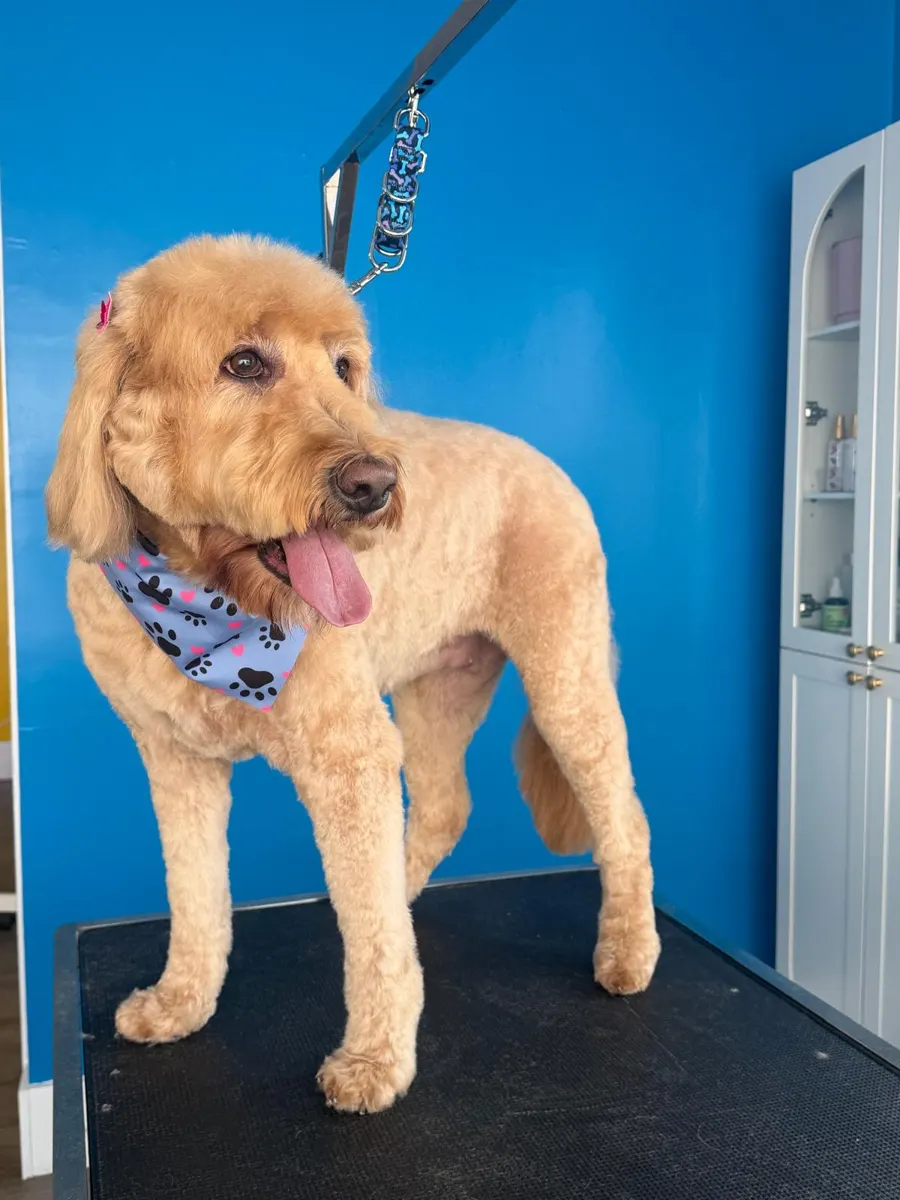
What dematting is
A mat is a clump of hair that has tangled and tightened on itself, often with shed undercoat trapped inside. Small mats start as tangles. Left alone, they grow, tighten toward the skin, and can pull every time your dog moves. Tight matting can also trap moisture and dirt against the skin.
Dematting is the careful work of separating and removing those mats. At Stardog Grooming it is $65 per hour, for any size dog, and it is booked as Request to Book so we can plan the time. It is usually done together with a full groom, priced by size: small, medium, large or extra large.
How we approach a matted coat
We start by looking and feeling through the coat to see how much matting there is, how tight it is and where it sits. Then we talk with you, because there is a real choice to make.
When mats can be worked out, we split them and brush them out bit by bit, keeping as much length as is safe. One client put it well:
“My sweet Violet had some tricky matting on her ears. Stardog was able to remove the matts without cutting too much hair off. Amazing service!” (Heather C.)
When mats are tight against the skin, brushing them out can hurt and take a long time for the dog. In that case, a shorter cut is often the kinder option. The coat grows back, and starting fresh makes it much easier to keep tangle-free. We will always explain what we see before going that way.
Comfort comes first either way. We take breaks when a dog needs one, and we work at a calm pace.
Which dogs mat the most
Any dog can mat, but some coats are more prone to it:
- Curly and wavy coats like Goldendoodles, Bernedoodles, Labradoodles and Poodles. Their hair keeps growing and catches shed hair inside the curl.
- Long, fine coats like Shih Tzus, Yorkies and Maltese.
- Feathered coats on Cocker Spaniels and Cavaliers, especially the ears and legs.
- Double coats that are not brushed out during shedding season, which can pack into dense mats on the hindquarters.
Common spots are behind the ears, under the collar or harness, in the armpits, on the belly, between the back legs and on the feet. Mats also show up after baths at home if a curly coat is left to air dry without brushing.
Keeping mats from coming back
Dematting fixes today’s coat. What prevents the next round is a routine:
- Brush down to the skin, not just over the top. A slicker brush followed by a metal comb is a good check: if the comb glides through, the coat is clear. See brushing your dog at home.
- Groom on a steady schedule. For curly coats, our guide to doodle coat care between grooms lays out a plan.
- Dry and brush after swims and wet walks.
- Consider a keratin coat treatment as an add-on for dry, frizzy coats.
If you have already found mats and are not sure what to do, start with our guide dog matting: what to do.
Frequently asked questions
How much will dematting cost for my dog?
Dematting is $65 per hour, so the total depends on how much matting there is and where. We look at the coat first and talk with you before we start.
Can you always save the coat?
Not always. Loose mats can often be brushed out, but tight mats against the skin can hurt to brush, and a shorter cut is sometimes the kinder choice.
Is dematting the same as a full groom?
No. Dematting is time spent working out mats. A full groom is the bath, dry, brush, nails, ears and haircut, priced by your dog's size.
How do I stop my dog from matting again?
Regular brushing down to the skin and grooming on a steady schedule. Doodles and other curly coats usually do best with a groom every 4 to 6 weeks.
Where do mats usually form?
Behind the ears, under the collar, in the armpits, on the belly, between the back legs and on the feet: anywhere the coat rubs or stays damp.