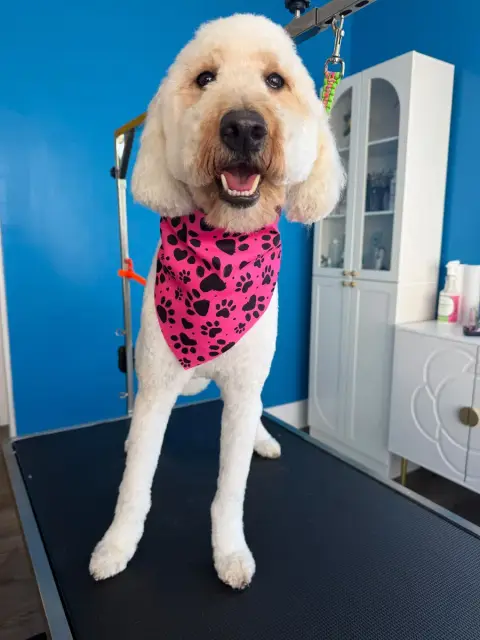
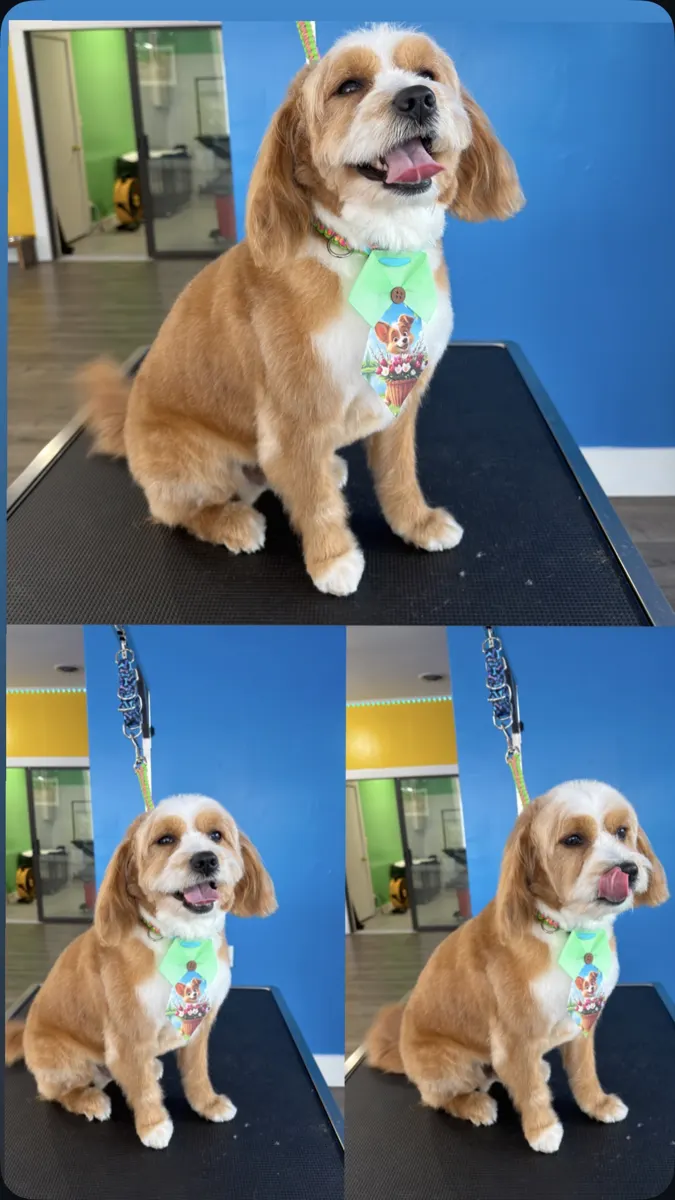
Grooming asks a lot of a dog: being lifted onto a table, held still, bathed, blown dry, and touched on the paws, ears, face and rear by someone they may not know well. It is no surprise some dogs find it stressful. The good news is that most anxious dogs can become calmer with a thoughtful plan, built a little at a time.
Why some dogs fear grooming
- Lack of early exposure. Dogs who were not handled or groomed as puppies meet it all at once as adults.
- A bad past experience. A painful mat removal, a quicked nail or a slip on the table can stick.
- Sensitivity to noise. Dryers and clippers are loud and buzz near the head.
- Being restrained. Some dogs dislike being held in place.
- Pain. Sore joints, ear problems, skin issues or dental pain make handling uncomfortable. This is especially common in seniors.
- General anxiety. Some dogs are anxious in many new places, not just at the groomer.
Signs your dog is stressed
Learning the early signals helps you step in before fear escalates:
| Mild stress | Rising stress | Severe stress |
|---|---|---|
| Lip licking, yawning | Trembling, tucked tail | Growling, snapping |
| Turning the head away | Panting when not hot | Trying hard to escape |
| Showing the whites of the eyes | Freezing, stiff body | Biting or biting at tools |
| Raising a paw | Pulling away from touch | Loss of bladder or bowel control |
If your dog reaches the severe column at home or at the vet, talk to your veterinarian before the next grooming visit.
What you can do at home
Short, positive handling sessions
Practice for a few minutes a day with small, high-value treats:
- Touch a paw briefly, treat, let go.
- Gradually hold the paw longer, then press the toes, then touch a nail.
- Do the same with the ears, muzzle, around the eyes, tail and belly.
- Introduce a brush, then a comb, then a nail clipper (just touching, no cutting).
- Run a hair dryer on a cool, low setting at a distance while your dog eats.
Always stop before your dog gets uncomfortable. The goal is many small successes.
Regular brushing
Dogs who are brushed regularly at home have fewer tangles, and fewer tangles means less pulling at the salon. Our guide to brushing your dog at home explains how to do it comfortably.
Practice the car ride
If car rides are part of the stress, take short drives that end somewhere pleasant, not just at the groomer or the vet.
Exercise before the appointment
A walk or play session before drop-off helps many dogs arrive calmer.
Working with your groomer
Tell the groomer when you book
Mention what scares your dog, what has happened before and what helps. A groomer who knows ahead of time can plan a calmer approach. Our checklist on how to prepare your dog for grooming covers what to share.
Keep drop-off short and calm
Long goodbyes tend to raise anxiety. A cheerful, brief handoff is usually easier on the dog.
Shorter, more frequent visits
A dog groomed every 4 to 6 weeks has a shorter, easier groom each time than one who comes in overgrown and matted twice a year. For some dogs, quick visits like a nail trim between grooms help build familiarity.
Be flexible about the haircut
For a dog who struggles with face or foot trimming, a simpler, practical style can mean less time on the table. Your groomer can suggest options.
A calm, patient groomer
Stardog Grooming works by appointment, with only a few dogs in the salon at a time, and customers often mention the team’s patience. One review from Priscila S. reads: “Priscila was so kind and patient with my dog, and he looked absolutely adorable after his groom.” Another, from Suzane A.: “What truly sets them apart is how well they treat the dogs before, during, and after their grooming appointments.”
When to involve your veterinarian
Please talk to your vet if your dog:
- Has bitten or tried to bite during grooming or handling
- Panics, struggles to the point of risking injury, or loses bladder control from fear
- Suddenly starts resisting grooming after being fine before
- Is fearful in many situations, not just grooming
Your veterinarian can check for pain or a medical cause, and can discuss behavior support or, when appropriate, medication. Some dogs benefit from working with a professional trainer or veterinary behaviorist. Never give your dog a calming product or medication without your vet’s guidance.
A groomer’s first job is safety. If a dog becomes too stressed to continue safely, it is better to stop and try again another day than to push through.
Puppies: prevention is easiest
Most grooming anxiety can be prevented with early, gentle experiences. If you have a puppy, start now. Our guide to your puppy’s first grooming explains how.
When to book a groomer
Once you have practiced some handling at home and shared your dog’s history with the team, book a groom at a regular interval. Young dogs can start with a puppy first groom, and small dogs up to 20 lb with the small dog full groom. For dogs who mostly struggle with nails, quick, frequent nail trims between grooms can help. If your dog shows severe fear or aggression, see your veterinarian before booking.
Frequently asked questions
Should I stay with my anxious dog during grooming?
It depends on the dog, but many anxious dogs actually settle faster once their owner leaves. Seeing or hearing you can keep them on alert and trying to get back to you.
Can I give my dog something to calm it before grooming?
Only with your veterinarian's guidance. Never give human medications or a product your vet has not approved, since some are dangerous for dogs or interact with other treatments.
Will my dog ever get used to grooming?
Many dogs improve a lot with gradual practice and regular, positive visits. Progress is often slow, and some dogs will always need a gentle, patient approach.
Why did my dog suddenly start hating grooming?
A sudden change can be a sign of pain, such as sore joints, an ear problem or a skin issue. It is worth a veterinary check, especially in older dogs.