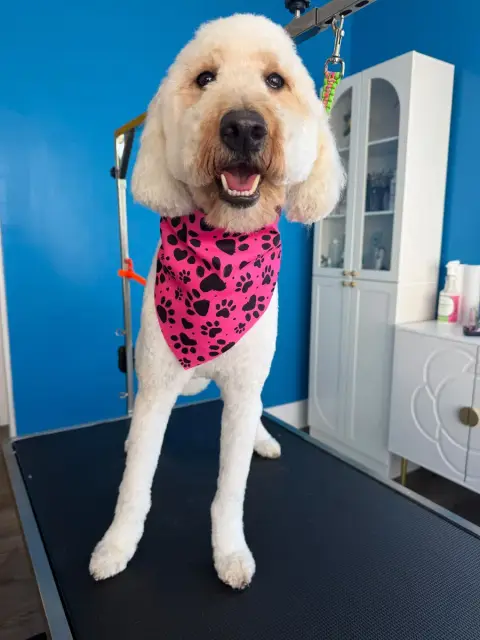
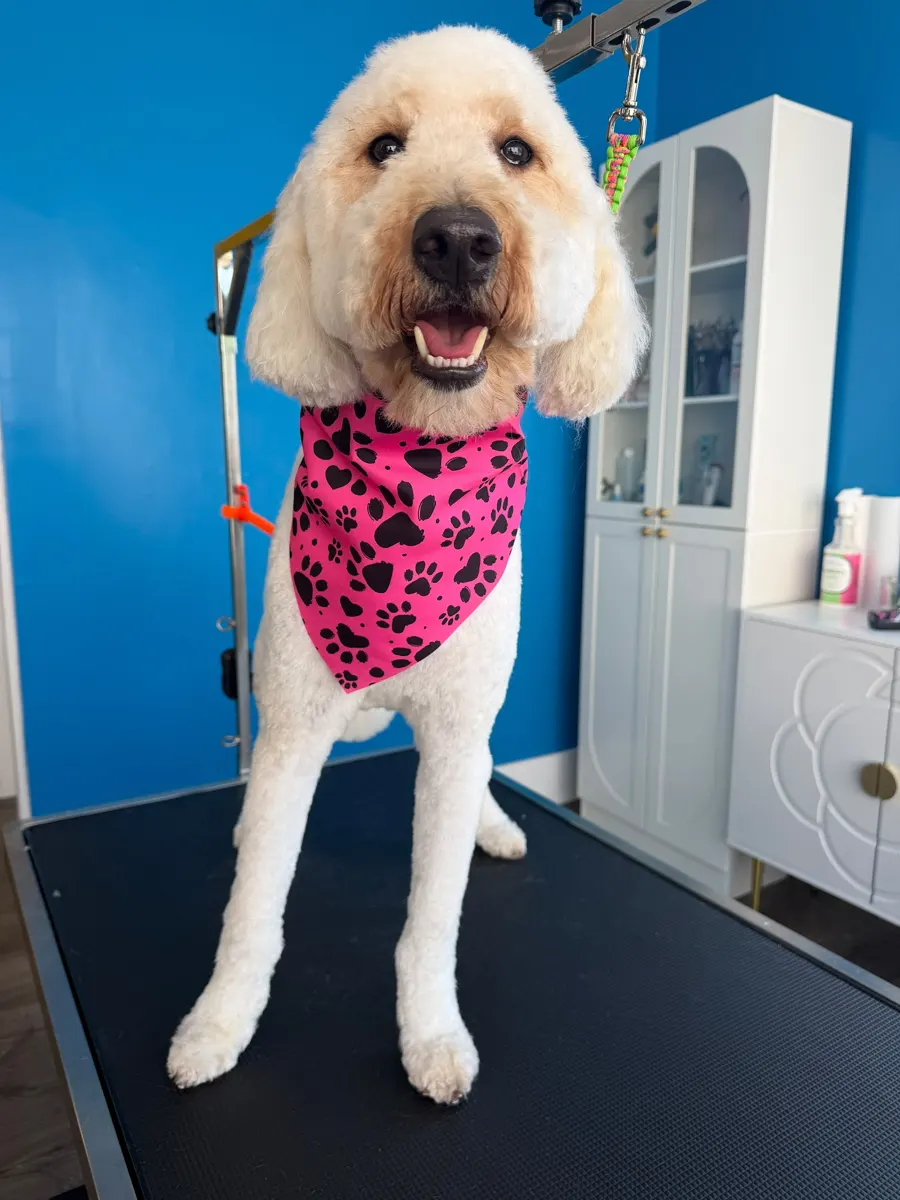
There is no single number that fits every dog. How often your dog needs a groom depends mostly on the coat, then on lifestyle, age and how much brushing happens at home. The schedule below is a starting point. Your groomer can fine-tune it after seeing your dog’s coat in person.
A grooming schedule by coat type
| Coat type | Common breeds | Full groom every | Brushing at home |
|---|---|---|---|
| Curly or wavy, non-shedding | Goldendoodle, Labradoodle, Poodle, Bernedoodle | 4 to 6 weeks | Several times a week, daily for long styles |
| Long, silky | Shih Tzu, Yorkie, Maltese | 4 to 6 weeks | Daily or every other day |
| Wiry | Schnauzer | 5 to 8 weeks | 1 to 2 times a week |
| Double coat | Golden Retriever, Bernese, Husky, German Shepherd, Pomeranian | 6 to 10 weeks | 2 to 3 times a week, more in shedding season |
| Short, dense | Labrador | 8 to 12 weeks | Once a week |
| Feathered spaniel | Cavalier, Cocker Spaniel | 4 to 8 weeks | 2 to 3 times a week, focus on ears and legs |
Why curly and long coats need the most frequent visits
Coats that do not shed much keep growing, and loose hair stays trapped in the coat instead of falling out. That trapped hair is what turns into mats. Doodles and poodles in particular can look fine on top while matting close to the skin behind the ears, under the collar and in the armpits. A 4 to 6 week schedule keeps the haircut tidy and catches tangles while they are still small. Our Goldendoodle grooming and Poodle grooming pages go deeper on those coats.
Why double coats need less cutting but plenty of brushing
Goldens, Bernese and huskies have a soft undercoat under longer guard hairs. They generally should not be shaved, and they do not need a haircut every month. What they need is regular removal of loose undercoat, especially when they “blow” coat in spring and fall. A bath, thorough blow-out and brush every 6 to 10 weeks, plus a de-shedding treatment added to the groom during heavy shedding, keeps the coat working the way it should. See our guide to de-shedding double-coated dogs for more.
Short coats still benefit from a routine
Labs and other short-coated dogs are low maintenance, not no maintenance. A bath and brush every couple of months removes dead hair and dirt, and it is a good moment for the nails and ears. Many short-coated dogs come in between full grooms just for a nail trim.
What changes the schedule for your dog
- Brushing at home. A dog brushed to the skin a few times a week can usually stretch the time between grooms. A dog that is rarely brushed will need shorter visits, or will need dematting when it does come in.
- The haircut length. A short “puppy cut” grows out more slowly into trouble than a long, fluffy style. If you love the long look, plan on more frequent visits and more brushing.
- Activity and environment. Dogs who swim, roll in leaves, hike or play in snow get dirty and tangled faster. Wet coats that dry without brushing are a common cause of matting.
- Age. Puppies benefit from short, frequent visits to learn the routine. Senior dogs often do better with a consistent schedule so each visit is shorter and less tiring.
- Skin and health. Some dogs need specific bathing routines for skin conditions. That should come from your veterinarian, and your groomer can follow the plan.
The pieces of grooming and how often each happens
A full groom is more than a haircut. At Stardog Grooming, every full groom includes a bath, dry, brush, nail trim, ear cleaning, and a haircut and trim according to breed standard or the style you prefer. Here is roughly how often each piece matters:
Nails
Most dogs need nails trimmed every 3 to 6 weeks. If you hear clicking on the floor, they are probably too long. Our guide on how often to trim dog nails explains why long nails affect posture and comfort.
Ears
Check ears weekly. Floppy-eared and hairy-eared breeds (spaniels, poodles, doodles) collect more debris and moisture. Redness, a strong smell, discharge or a lot of head shaking are reasons to see a veterinarian, not to clean harder. We cannot groom dogs with infected ears, so it helps to get that checked first.
Teeth
Daily brushing at home is ideal. Professional teeth brushing during a groom is a helpful extra, but it does not replace dental care from your vet.
Bathing
Most dogs do well with a bath every 4 to 8 weeks unless they get into something. Between grooms, a rinse with plain water after a muddy walk is often enough.
Signs your dog is overdue
- You can feel tangles or tight clumps behind the ears, under the collar or between the legs
- Hair is growing over the eyes or causing squinting
- Nails click on hard floors or curve toward the paw pads
- A noticeable odor returns soon after a bath
- Hair around the paw pads is long enough to make your dog slip on smooth floors
- Shedding is suddenly heavier than usual
If you notice skin redness, scabs, hot spots, lumps or constant scratching while brushing, call your veterinarian. Grooming can keep skin clean, but it is not a treatment for a skin problem.
Building a routine that sticks
The easiest way to stay on track is to book the next appointment before you leave the current one. Pick an interval that matches the chart above, then adjust after a cycle or two. If your dog comes in tangled every time, shorten the gap. If the coat still looks neat at the appointment, you may be able to stretch it.
Between visits, a few minutes of brushing at home does more for the coat than any single appointment.
When to book a groomer
Book a full groom when your dog reaches the end of its usual interval, or sooner if you see any of the warning signs above. Choose the service by weight: small dogs up to 20 lb, medium dogs 21 to 40 lb, large dogs 41 to 70 lb or extra large dogs 71 lb and up. If you just need nails between grooms, a nail trim takes about 15 minutes. You can compare everything on our pricing page.
Frequently asked questions
Can you groom a dog too often?
Bathing too often with harsh products can dry out some dogs' skin, so most dogs do not need a full bath more than every few weeks. Brushing, on the other hand, is hard to overdo when it is gentle.
Do short-haired dogs need professional grooming?
They need less of it, but a bath, nail trim, ear cleaning and a good brush-out every couple of months still helps with shedding and keeps nails at a comfortable length.
How often should a puppy be groomed?
Short, positive visits every few weeks help a puppy get used to the table, the dryer and handling, even before the coat needs much work.
Should I groom my dog more in summer or winter?
Many owners book a little more often in spring and fall when double-coated dogs shed heavily, and keep a regular schedule in winter so wet snow and salt do not lead to mats and dry paws.